
A request for environmental testing rarely arrives as a clean specification. A customer sends a test plan that cites MIL-STD-810 or IEC 60068, a mechanical drawing, a mass and power budget, and an email asking for HALT on three prototypes followed by an ESS screen for production. Sometimes the vibration profile is in a table. Sometimes it is a screenshot of a slide.
Before the lab can quote, an engineer has to turn that into a test plan of their own: which chamber, which shaker, how many hours on each, what fixture, how many monitoring channels and what kind of report. The quote is only as good as that reading. If the ramp rate is specified on the product rather than the chamber air, a chamber that looked fine may not reach it with the load inside. If the fixture and product are heavier than expected, the shaker in the plan may not have the force rating for the profile.
Where the time goes
Quoting a test program is engineering work. The engineer reads the request, works out the profile for each test, checks it against the lab's equipment, estimates chamber and shaker hours, scopes the fixture and instrumentation, and writes back with questions about everything the request leaves open.
The information is scattered, and test plans are often written by people who do not run chambers. A vibration profile sits in an appendix. The product mass sits in a drawing title block. The report deadline sits in the purchase terms. HALT requests are often the loosest of all, because HALT is a discovery process. The customer may not state the product's operating limits, the number of samples or how the product will be monitored while it is stressed.
The engineers who can read a request well are also the ones running tests. Every hour spent on a quote is an hour away from the test floor, and a slow quote can lose the work to a lab that answered first.
What the agent does
An agent for this process reads the request and checks it against your lab. It is built on the same pattern as every Velture agent: the model reads the documents and your rules make the decisions. It hands the engineer a structured summary, with every item traced back to the page it came from.
1. Reads the whole request. Test plans, specifications, drawings, spreadsheets and the customer's email thread all go in, including scanned pages and tables inside images.
2. Extracts what the quote depends on. For each request the agent pulls out:
- the standards and methods cited, with their revision, such as MIL-STD-810H Method 514.8, IEC 60068-2-64 or RTCA DO-160
- thermal profiles: temperature range, ramp rate, dwell time, number of cycles, and whether the ramp rate is measured on the air or on the product
- vibration profiles: random or sine, Grms, frequency range, duration per axis and number of axes
- the product: dimensions, mass, power, cooling and number of units
- monitoring during the test: functional checks, thermocouple and accelerometer channels, power supplies
- for HALT: step sizes, the product's operating specification and the stopping criteria
- for ESS and HASS: the screen profile, units per batch and expected volumes
- delivery terms: witness testing, accreditation requirements, report format and deadline
Each value carries its source page and a confidence score.
3. Checks the request against your lab. Your equipment list and policies run as ordinary code that returns pass or fail. Does the product fit the chamber's working volume? Can the chamber reach the ramp rate with this thermal load? Does the shaker's random force rating cover the moving mass at the specified Grms? Is the method within your ISO/IEC 17025 scope? Is the report deadline within your standard turnaround? The same input always gives the same result, so every check can be tested.
4. Builds the quote inputs. Hours on each piece of equipment, setup and fixture work, instrumentation, engineering support, consumables such as liquid nitrogen for HALT, and the report. Alongside them comes a list of clarification questions, each linked to the clause or the missing item that raised it.
5. Escalates what it cannot read with confidence. If a mounting-hole pattern on a scanned drawing is illegible, the agent does not guess. The item goes to an engineer with the page attached.
Test design and pricing stay with your engineers. The agent makes sure they start from a complete picture of what the customer asked for.
An example
Illustrative, not customer data.
A lab receives a request for a rugged computer enclosure: HALT on three prototypes, then an ESS screen for production. The package is a 32-page test plan, a mechanical drawing and an email thread. Among other items, the agent returns these four.
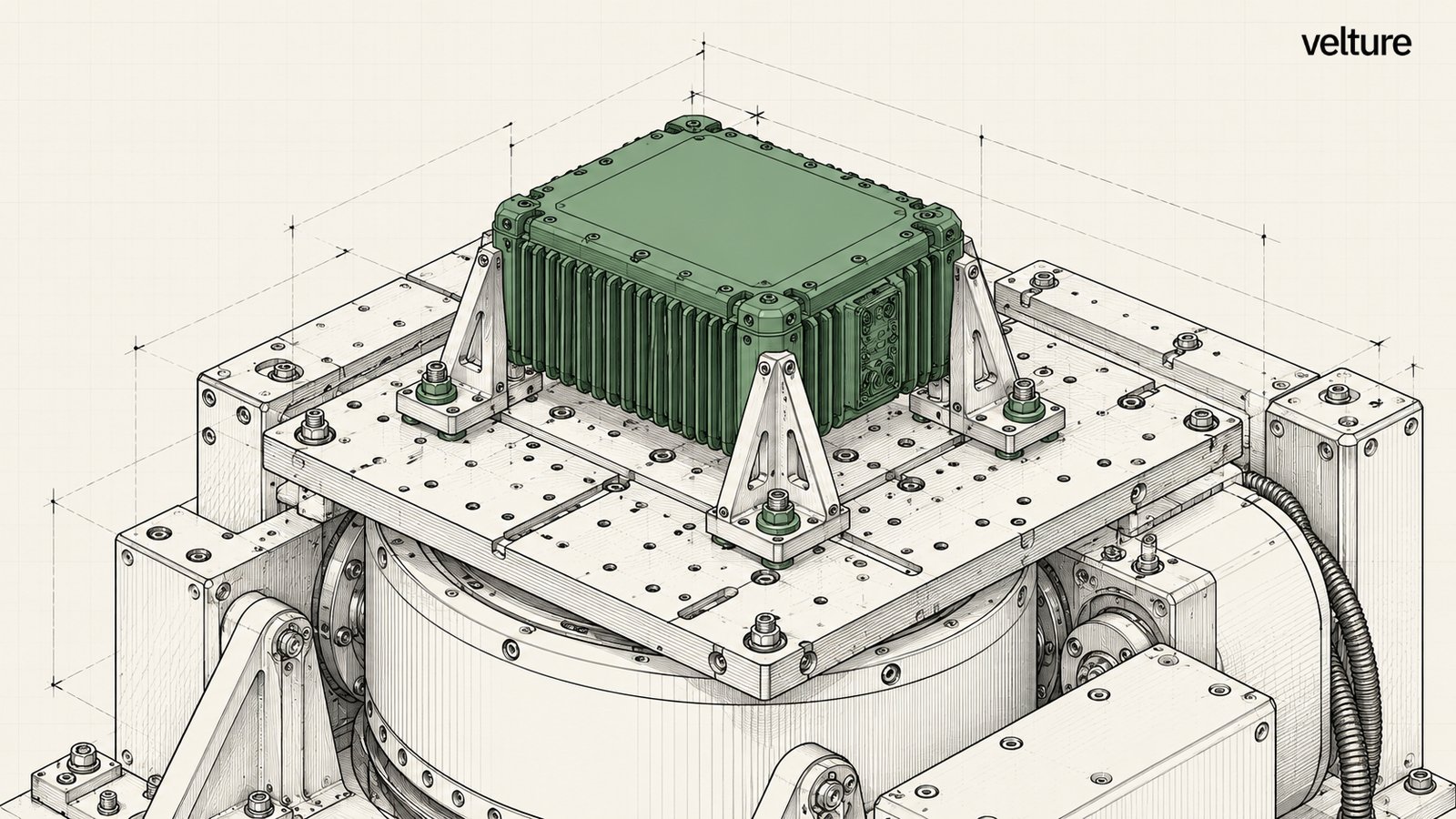
- Shaker capacity. The ESS profile calls for 6 Grms random vibration from 20 to 2,000 Hz. The product weighs 18 kg, the lab's fixture estimate for a unit this size is 30 kg, and the shaker armature adds 20 kg, so the moving mass is 68 kg. That needs about 4.0 kN of random force. Shaker A is rated at 3.5 kN, so the agent plans the test on Shaker B.
- Ramp rate. The thermal cycle runs from −40 °C to +85 °C at 15 °C per minute. The plan does not say whether that rate is measured on the chamber air or on the product. With three 18 kg units inside, the lab's chamber data shows it can hold that rate on the air but not on the product, so the agent drafts a clarification.
- Standard revision. Section 2 cites MIL-STD-810G, but the vibration procedure references Method 514.8, which belongs to 810H. The agent quotes to 810H, because that is what the procedure describes, and asks the customer to confirm.
- Missing HALT inputs. The request asks for HALT but gives no operating temperature limits and no functional test. Both go on the clarification list, because without a functional check running at each step the lab cannot tell when the product stops working.
Show the air profile as a table
| Phase | Minutes | Chamber air |
|---|---|---|
| Ramp down | 0.0–4.3 | +25 → −40 °C |
| Dwell | 4.3–24.3 | −40 °C |
| Ramp up | 24.3–32.7 | −40 → +85 °C |
| Dwell | 32.7–52.7 | +85 °C |
| Ramp down | 52.7–61.0 | +85 → −40 °C |
| Dwell | 61.0–81.0 | −40 °C |
| Ramp up | 81.0–89.3 | −40 → +85 °C |
| Dwell | 89.3–109.3 | +85 °C |
| Return to ambient | 109.3–113.3 | +85 → +25 °C |
The engineer still designs the test and prices it. The difference is that these four items are on the list before the quote goes out, instead of turning up on the test floor.
Why this leads to better quotes
A quote can go wrong in two directions. Miss a requirement and the lab absorbs the cost of a larger shaker, a new fixture or a retest. Pad the price to cover what is unclear and the work goes to a lab that read the request more carefully.
Consistent reading reduces both risks. When every request is checked against the same equipment data and the same rules, capacity problems and gaps in the test plan show up before the price is set. Questions reach the customer while the program is still being planned, which costs far less than finding the problem after chamber time is booked. Engineers also spend less time on each quote, so the lab can answer requests faster.
The process leaves a record as well. Every extracted value points back to a page, so if a dispute comes up after testing, the team can see what the request said and what the quote assumed.
How to know it works
An agent like this should be measured before anyone relies on it. The best test set is your own history: past requests where you already know what was quoted, what questions were asked and what was eventually run. Run the agent on those, compare its output with the known answers field by field, and you get an accuracy number for each field instead of a general impression.
We will run every agent against a test set like this before each update, and we will report accuracy to customers every month. If the score on a field such as ramp rate or Grms drops, it will show up in the report.
Keeping customer data private
Customer drawings and test plans describe products that are often unreleased, and most arrive under an NDA. The agent is built to run in your private cloud, on your own servers or fully air-gapped. We will not use customer data to train models.
Where to start
Pick one service line with a steady flow of requests, such as ESS screening or vibration testing. That is usually where engineers spend the most time quoting, and where there are enough past quotes to test against.
If your engineers spend hours turning test plans into quotes, book a 15-minute call. We will tell you whether an agent can take on the reading.